
News
See Latest Faculty News, Announcements & Success Stories


10/12/2025

Student Life
Administrative Staff


Departments
Vision & Mission
The Faculty of Agriculture at Latakia University is part of the higher education system, working to achieve the general goals of the state through the opening of agricultural colleges in the country, in order to develop the agricultural sector, both plant and animal, because of the importance of this sector in the national economy, and to achieve the slogan of national food security. This is done by graduating qualified and efficient cadres to lead the agricultural sector, work on its development, and popularize and localize agricultural culture to ensure the sustainable development of the country.
College of Agriculture message
The mission of the College of Agriculture is a comprehensive scientific, social, cultural, and national message that seeks to transfer modern agricultural knowledge and expertise, and settling and employing them to serve the community in proportion to the agricultural reality of the country, as well as preparing qualified human cadres equipped with these knowledge and experiences. And preparing them scientifically, socially and culturally to manage and practice agricultural work with love, voluntariness, self-confidence and high responsibility. The college’s mission also includes developing the reality of the agricultural, forestry and environmental sector in the country in general and in the Syrian coast in particular, through diagnosing the current agricultural reality, and working in cooperation with agricultural research centers located in the coastal region to find effective solutions to agricultural problems The current situation and the removal of all quantitative and qualitative obstacles to the development of agricultural production in the coastal area. The college’s mission also aims to develop a feeling of love of work, nurture the spirit of national feeling, love of the homeland and the Arabic language, love of work and call for noble morals, and adherence to virtuous social values, as well as developing the means of education, scientific research, teaching principles and methods, in addition to To focus on warming
Objectives of the College of Agriculture
First: Advancement of higher agricultural education, achieving a high quality level of agricultural education to keep pace with international standards, setting the necessary national standards to ensure this, and developing capabilities for the purpose of reproducing modern technologies at the local level.
Second: Activate and activate scientific research and improve its conditions, and continue to build scientific capabilities and stimulate national intellectual and scientific wealth by adopting a successful practical policy for science, technology and creativity, in addition to deepening specialization and knowledge in order to ensure the preparation of qualified and trained scientific cadres capable of Improving agricultural production in the coastal region by finding appropriate solutions to the problems faced by the agricultural sector, through closer cooperation between the college and the agricultural research centers located in the coastal region.
Third: Paying attention to Arab civilization, Arab heritage, moral and patriotic values, developing national sentiment, spirit of cooperation and values of teamwork.
Fourth: Working on activating the slogan of linking the university with society by finding effective solutions to the problems that the agricultural sector suffers from, and providing it with qualified and trained cadres, as well as holding training courses, scientific seminars, various activities and joint periodic meetings with workers in the agricultural sector. Various productive sectors, and continuous evaluation of joint work
Fifth: Strengthening the bonds of cooperation between the College of Agriculture and the local, Arab, regional and international agricultural scientific and research centers, with the aim of exchanging knowledge and experiences, transferring them and benefiting from them in developing agricultural production in the country in general and in the coastal region in particular, and the continuous evaluation of this Cooperat.
Sixth: Activating the movement of authoring, translating and publishing agricultural books, references and publications to ensure that they reach all workers in the agricultural sector.
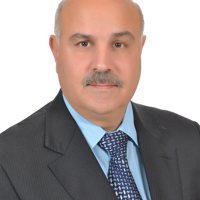
The Dean 's Word
Welcome to this website dedicated to the Faculty of Agriculture at Lattakia University. I welcome you and invite you to browse the site and learn about the faculty, which opened starting from the academic year 1971–1972 by virtue of Legislative Decree No. 12 dated 12/5/1971. The duration of study at that time was only four years, and it was later amended to become five years by virtue of Decree No. 183 of 1987, which allowed the graduate to be granted a university degree in agricultural engineering. Based on the modern internal regulations of the faculty approved by virtue of the Higher Education Council Decision No. 270 dated 13/8/2007, the duration of study at the faculty was set at five years, three of which are general and two for specialization. There are currently nine specializations at the undergraduate level and ten specializations at the postgraduate level, and work is underway to develop them continuously within the framework of the higher education system in our beloved country. The faculty has contributed and continues to contribute to preparing and graduating human cadres with high competencies in various fields of agricultural sciences to transfer, disseminate, localize, and invest agricultural expertise within the framework of the sustainable development process, with the aim of reaching the best production in quantity and quality at the lowest possible costs and with the least harm to the environment. The faculty seeks to implement its mission through the educational and research process, as well as through holding scientific seminars and conferences, most of which are held in participation and cooperation with official governmental and non-governmental institutions, and specialized scientific centers of relevance locally, regionally, and internationally. The advantages that a graduate of the Faculty of Agriculture obtains are not limited to the qualification necessary for government employment opportunities. Rather, an active student and an interested graduate wishing to do so from any of the faculty's specializations can invest the knowledge they have acquired in establishing productive projects that provide job opportunities that can be developed to secure an excellent income for those working in them. Examples are many, including but not limited to the many and varied plant production projects such as vegetable and fruit nurseries, ornamental plant and various crop production projects, medicinal and aromatic plants, and the many animal production projects and supervising or participating in them, as well as investing some qualified laboratory and professional scientific expertise in many specializations such as pruning, grafting, fertilization, implementing modern irrigation networks, diagnostic methods, sample analysis in various food sciences and manufacturing, and expertise in crop protection and integrated pest management. Visitors to the faculty's website can learn about its various departments, activities, courses, lesson plan vocabulary, and laboratories in each specialization, in addition to many details they need and benefit from in planning for their future or helping others who have obtained the general secondary certificate and are looking for information that helps them make a decision about the priorities of their preference order in the general competition for university admission. Within this introductory preface to the faculty, I can only wish you benefit and enjoyment while browsing the site and the information contained therein, wishing to invite your friends to view it, and we are fully prepared to receive questions and inquiries and answer them. I thank you at the end of my remarks for any suggestion or comment that contributes to improving and developing the website's performance.