
Faculty Definition
News
See Latest Faculty News, Announcements & Success Stories
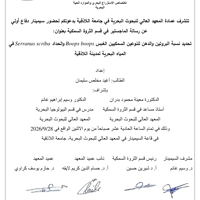
26/09/2026
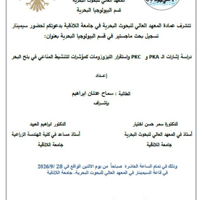
26/09/2026
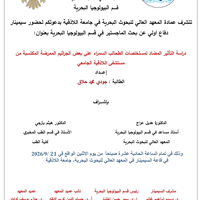

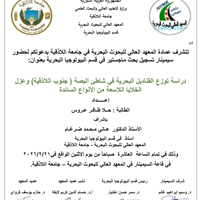
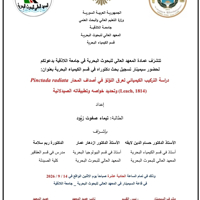
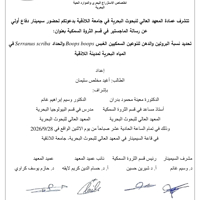
26/09/2026
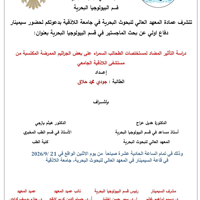
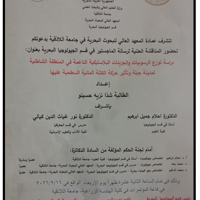
Student Life
Administrative Staff
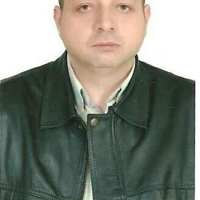
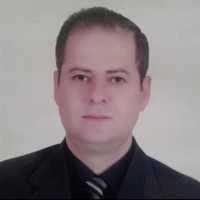
Dr. Dr. Hussam Eddin Karim LAIKA
Scientific Vice Dean Marine Chemistry - Carbonate system and its impact on the Environmental equilibrium
Vision & Mission
Vision
The general vision of the Higher Institute for Marine Research revolves around developing marine resources in the Syrian regional waters and rationalizing their investment by making use of marine sciences, in a way that serves economic and social development in Syria.
The message
First: Working to establish a research and academic system in the institute according to recognized national and international standards, with continuous and renewed development to qualify the institute for institutional accreditation from all local, regional, and international bodies.
Second: Increasing the institute's contribution to sustainable development by improving the quality of the marine environment and the Syrian coast, as well as developing environmental awareness.
Third: Preparing specialists from postgraduate students (Master's and PhD) in the field of marine environment and environmental pollution, with the aim of gaining confidence and the ability to compete in the labor market.
Fourth: Opening channels for cooperation with local, Arab, and international scientific bodies, in line with the university's strategy in the fields of scientific research and postgraduate studies.
The goals of the institute:
• Developing graduate studies for master's and doctoral degrees in various fields of marine science to keep pace with scientific progress and effective contribution to the development of scientific research that serves sustainable economic development and the preservation of the coastal environment.
• Contributing to preparing specialists in the field of marine sciences and coordinating training and joint scientific research operations in cooperation with national and international bodies.
• Preparing bulletins, periodicals, and scientific and economic studies related to marine resources and their resources.
• Work to make optimal use of marine resources in accordance with the requirements of sustainable development.
• Strengthening cultural and scientific research relations at the national, regional and global levels and participating in scientific conferences and seminars at all levels, especially those related to marine sciences.
• Communicating with regional and international organizations to follow developments in the field of marine sciences.
• Developing proposals for Arab, regional and international treaties and agreements related to marine sciences.
The Dean 's Word
The Higher Institute for Marine Research aims to conduct and develop research related to marine sciences and coastal ecosystems in the Syrian territorial waters, rationalize the investment, and protect the marine environment and biodiversity within the plan for economic and social development and reconstruction in Syria. It also seeks to cooperate with various relevant national and international bodies and institutions by concluding cooperation and coordination agreements and organizing or participating in conferences and workshops, which qualified the Institute to gain confidence and appreciation at the national and international levels. The Higher Institute for Marine Research was established by Legislative Decree No. /2/ of 1971 The judge to establish a center for marine research in the city of Lattakia (the Blue Beach area) and Latakia University was assigned to manage the center in 1987. In 2000, the legislative decree No. 426/ was issued to establish the Higher Institute for Marine Research at Latakia University.
The Institute has implemented a large number of researches related to biodiversity, marine biology and culture, water chemistry, pollution, groundwater movement and its overlap with the marine environment, the movement of water masses, marine geology and marine biotechnologies. Achieving sustainable development, which reflects positively on the economic and social aspects in general.