
Student Life
Administrative Staff
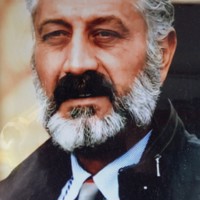

Teaching Staff Members
Teaching Assistant Staff Members
Tutors
Vision & Mission
The Technical Veterinary Institute is concerned with preparing practical and scientific cadres capable of meeting the needs of the local and regional labor market, to contribute to the development and improvement of livestock, maintain its health, increase its productivity, instill a spirit of cooperation among students, and care for the comprehensive and balanced development of students in an educational environment. The study at the institute is distributed over two academic years through four semesters, during which all theoretical and practical courses are covered in parallel in the institute's halls and laboratories, in addition to scientific field trips to public and private livestock farms, so that the institute's objectives are achieved, which are:
First: Providing students with knowledge in the field of basic veterinary sciences and developing their skills in practical veterinary fields.
Second: Qualifying students and enabling them to make the best choice for the veterinary work they will practice, in line with their capabilities and the labor market.
Third: Achieving the highest level of interaction between the institute, the university, and society in its public, private, and mixed sectors.
Fourth: Meeting the needs of society for technical specialists in the field of livestock.
The Director's Word
Due to the steadily increasing population in the country, the need to meet human nutritional requirements grows day by day. Since animal protein is one of the most important sources of human food, the state has given increasing attention to livestock through the establishment of cattle stations and poultry farms in order to provide food such as meat, eggs, milk, etc.
The state has also supported sheep breeders in the desert by distributing fodder, developing pastures, and distributing veterinary vaccines free of charge throughout the country in order to eliminate communicable diseases and prevent the spread of epidemic outbreaks that threaten livestock. Among the most important contributions of the institute in the field of livestock service in the country are:
1. Protecting public health by eliminating disease-transmitting vectors.
2. Protecting humans and the environment from over 120 zoonotic diseases (transmissible from animals to humans), including fatal epidemic diseases.
3. Developing control programs for transmissible diseases and prevention through vaccination programs, provided by the Prevention Department at the institute.
4. Providing veterinary services for livestock.
5. Graduating veterinary medical cadres with the scientific knowledge and essential preventive skills for livestock development.
6. Providing scientific consultations to animal breeders and poultry farm owners.