Workshop titled "Discussion of the Development of Academic Reference Standards (ARS)" at the Higher Institute for Environmental Research in Cooperation with the Quality Assurance Center
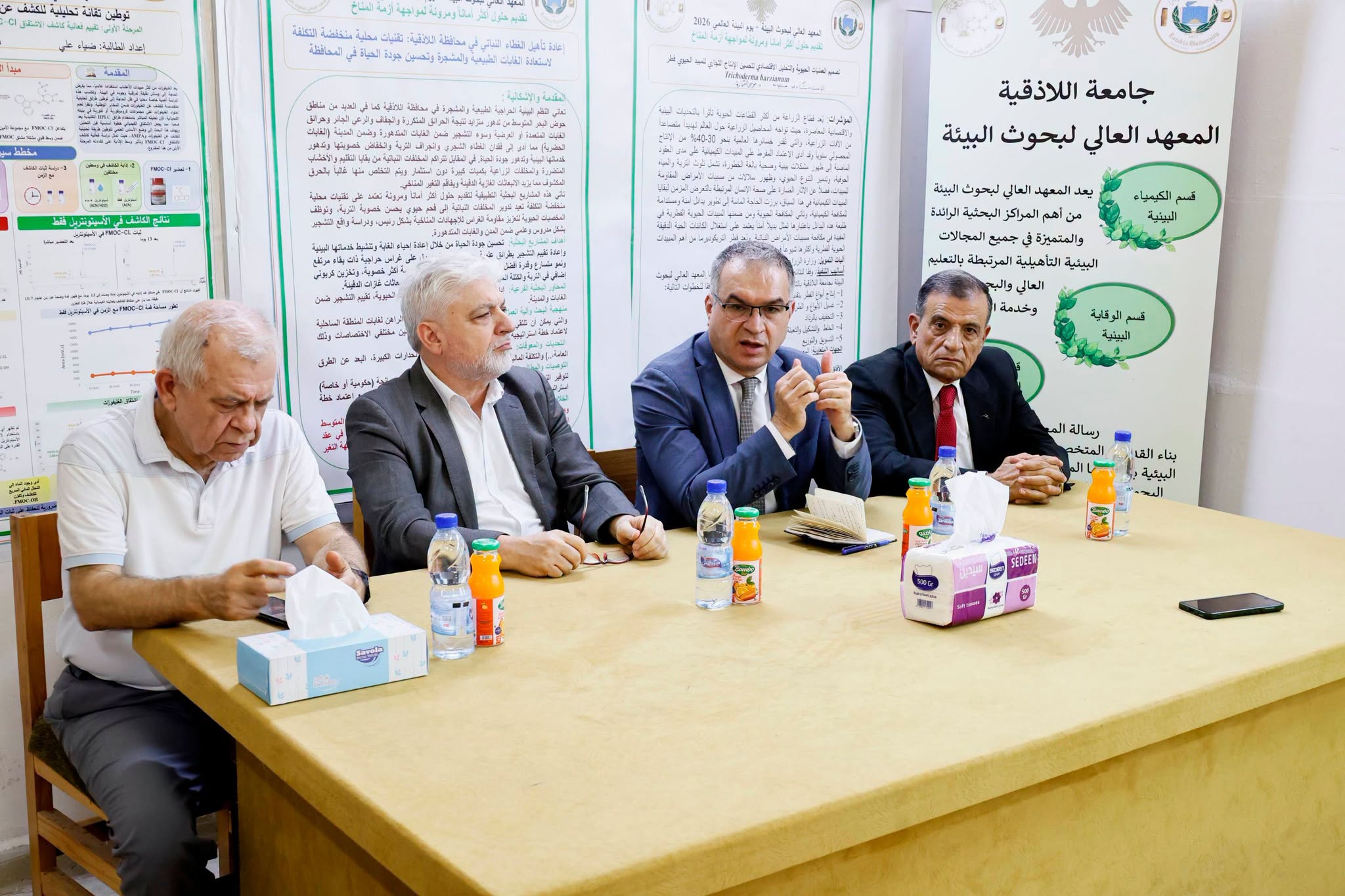
The Higher Institute for Environmental Research at Latakia University discussed, during a workshop titled "Discussion of the Development of Academic Reference Standards (ARS)," topics and postgraduate research at the institute and the extent of their alignment with the priorities and strategies of government bodies concerned with environmental affairs.
The workshop focused on strengthening the link between scientific research and community needs, and aligning the topics of master's and doctoral research with current environmental problems and applicable priorities, enabling the transformation of academic study results into practical proposals and solutions.
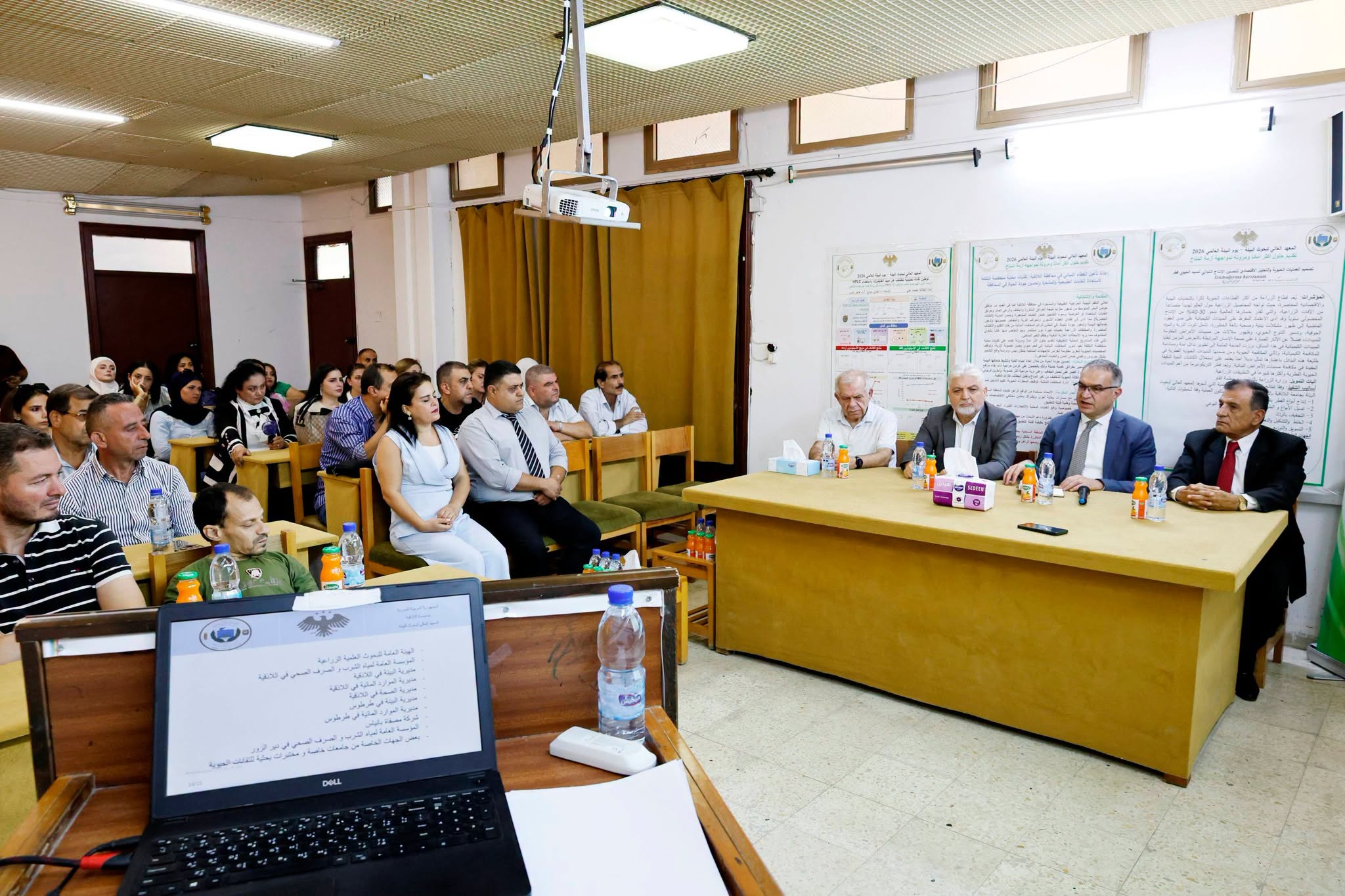
Engineer Mohammad Hassano, Deputy Governor of Latakia, emphasized the importance of building higher education and scientific research policies based on realistic and implementable data, within a participatory vision in which roles are distributed according to plans with clear objectives and time programs.
Dr. Munther Asaad, Vice President of Latakia University for Administrative and Student Affairs, pointed to the importance of integration between research and executive institutions in studying problems and proposing solutions, and the necessity of directing curricula and research towards the most priority studies according to the needs of society.
For his part, the Director of the Quality Assurance Center at Latakia University, Dr. Aqeel Hajouz, explained that the workshop comes within the plan to develop educational and scientific research programs and curricula and link them to the needs of society, noting that the discussions addressed the institute's vision and mission and the proposed academic reference standards, in addition to research axes related to current environmental problems.
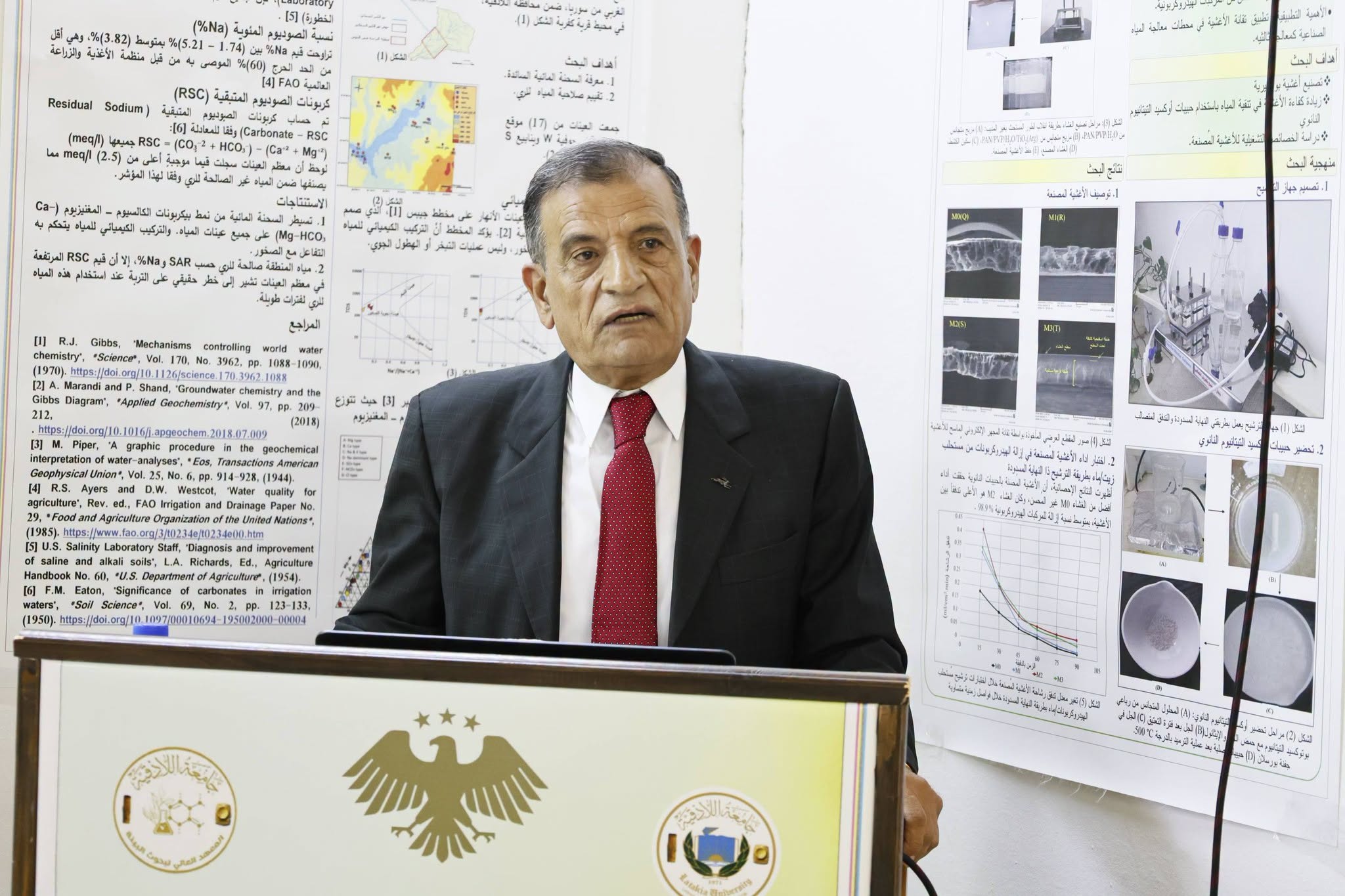
The Dean of the Higher Institute for Environmental Research, Dr. Musa Al-Samara, explained that the workshop aims to exchange expertise and transfer knowledge from the university to practical application, through the integration of the efforts of bodies concerned with environmental affairs and the distribution of roles among them to reach more sustainable solutions.
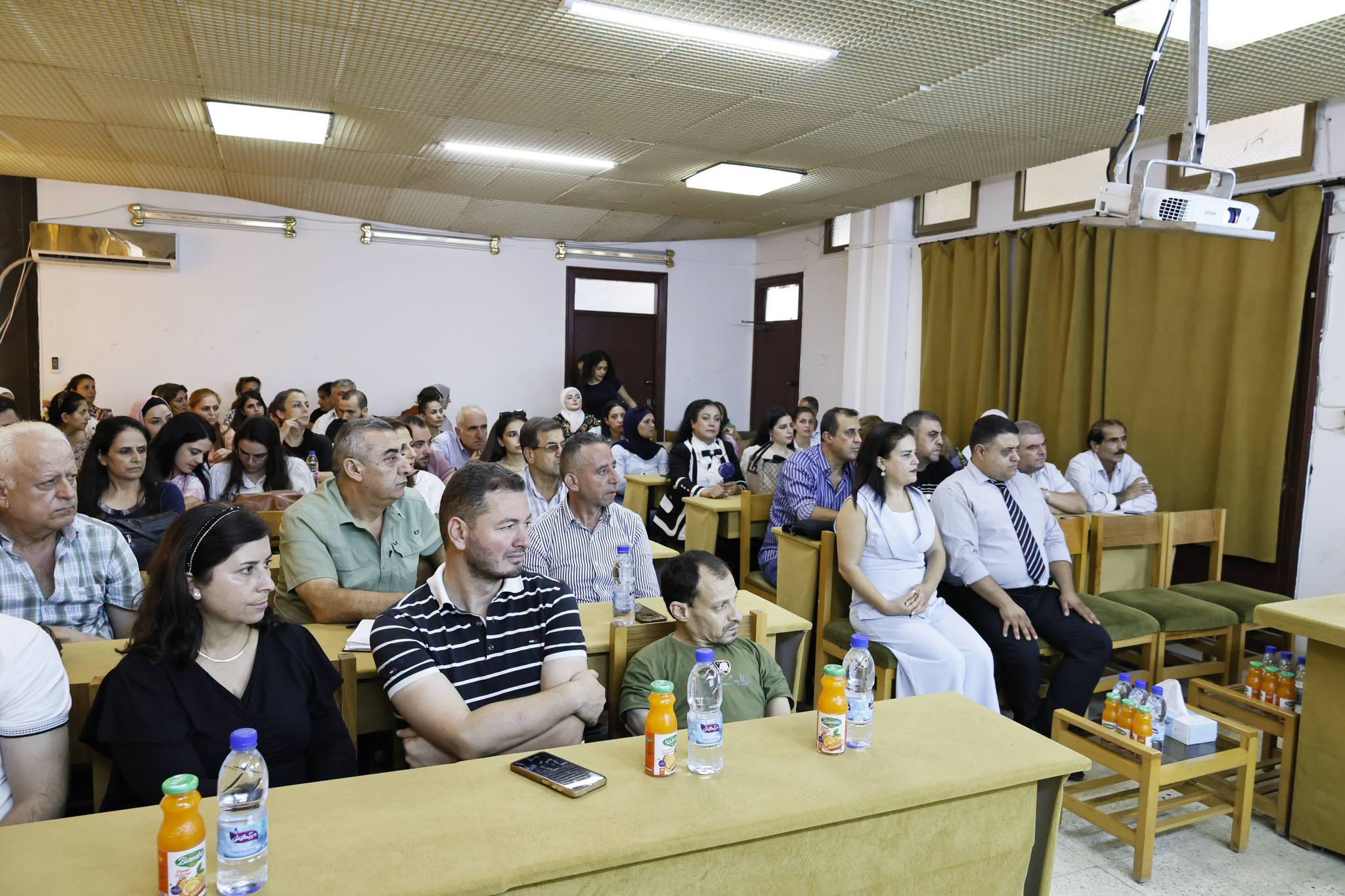
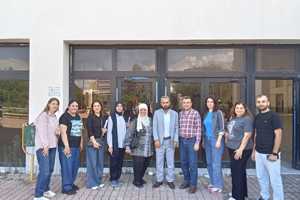
The workshop witnessed the participation of the teaching staff, postgraduate students, and representatives of the governorate, the university presidency, the local community, and bodies related to the studies implemented by the institute.
Latakia 16-9-2026
Photo Gallery