Workshop on Developing Academic Reference Standards (ARS) for Engineering Sectors
The Quality Assurance and Accreditation Center held today, Wednesday, 13/5/2026, the first of its practical workshops for implementing the project to develop Academic Reference Standards (ARS), starting with the engineering faculties, in the presence of Prof. Dr. Mohammad Haroun, Vice President of the University for Scientific Affairs.
The workshop was opened with a speech by Dr. Mohammad Haroun, in which he emphasized the importance of developing Academic Reference Standards (ARS) for all faculties of the university, contributing to elevating the level of the educational process and enhancing the alignment of educational outputs with labor market requirements and modern academic developments.
For his part, Dr. Aqeel Hajouz, Director of the Quality Assurance and Accreditation Center, explained in his lecture the concept of (ARS) standards and the mechanism for formulating them based on the national standards (NARS) and approved international standards for each academic program, focusing on their role in developing and updating educational programs.
Dr. Alaa Al-Tawil, Head of the Educational Process Quality Assurance Department, also delivered a lecture covering the mechanisms for describing academic programs and courses and preparing their reports according to the latest approved standards.
The workshop featured practical training supervised by the heads of departments at the Quality Assurance Center, where participants from the teaching staff worked on establishing practical foundations for developing (ARS) standards. This included presenting the timeline for implementing the ARS development, then working on evaluating the program and courses for the engineering faculties and presenting models of this evaluation, paving the way for each faculty to launch its own workshops and committee meetings to complete the preparation of modern standards, overcome challenges related to the educational process, and ultimately achieve higher quality and more efficient academic programs.
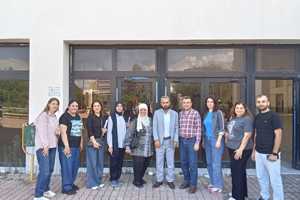
Photo Gallery